


Osteochondrosis is a dangerous disease of the spine that, if complicated, can permanently worsen the quality of life.This pathology has become significantly "younger": various forms of the disease are increasingly found in young people.
Lumbar osteochondrosis: symptoms and treatment with medications.
Osteochondrosis is the name given to the deformation of the intervertebral discs, cartilage and bones of the spine.
Depending on the location, cervical, thoracic and lumbar (lumbosacral) osteochondrosis is distinguished.
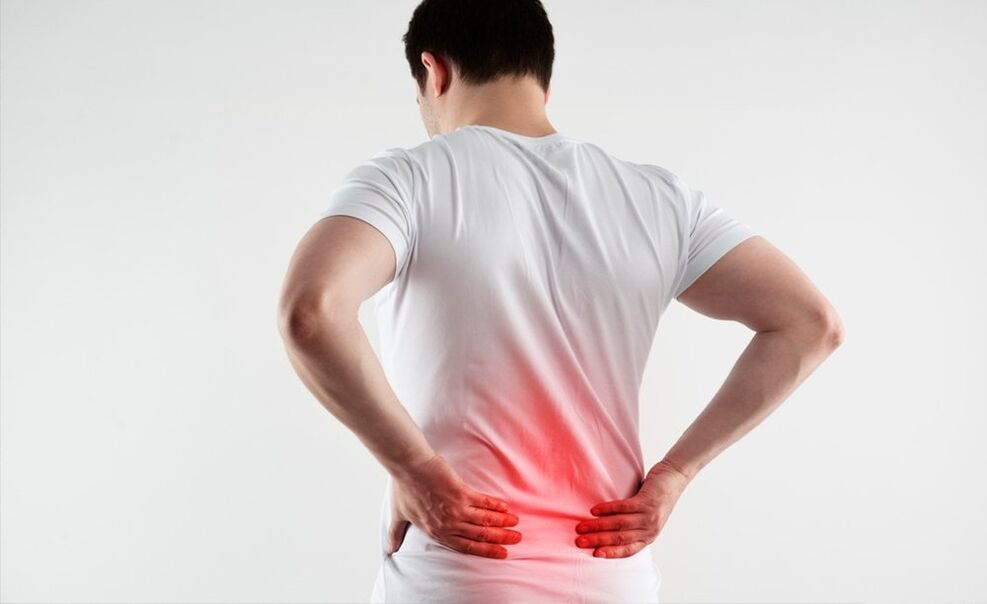
The causes of the disease are quite varied:
- walk upright;
- scoliosis;
- spinal injuries;
- flat feet;
- jobs that involve lifting heavy objects;
- frequent changes in body position;
- spinal overload;
- prolonged stay in uncomfortable positions;
- obesity and low physical activity;
- poor nutrition, accompanied by a deficiency of nutrients;
- stress.
Symptoms of lumbar osteochondrosis.
- First of all, the disease makes itself felt through pain.The pain hurts;
- There is a feeling of pain in the lower extremities and subsequently numbness;
- Due to discomfort, motor activity is significantly reduced;
- The pain worsens with heavy lifting, intense physical activity, sudden movements, and even sneezing/coughing.
Diagnosis of lumbar osteochondrosis.
The conclusion is made by a neurologist based on the patient's complaints.The doctor examines the spine in different positions, at rest/in motion.X-rays, CT scans, or MRIs should be ordered to confirm the diagnosis.Depending on the results obtained, a wide range of treatments is prescribed: medications, physiotherapy, massage and physiotherapy procedures.
Treatment of osteochondrosis of the lumbar spine with medications.
Medications should stop the acute process, relieve symptoms and partially restore the damaged tissue of the intervertebral disc.
The medications used are classified according to their type of action:
- Analgesics: relieve acute pain;
- Nonsteroidal anti-inflammatory drugs (NSAIDs): relieve swelling and inflammation;
- Muscle relaxants: relax spasmodic muscles;
- Glucocorticoid hormones: prescribed when other medications have no effect;
- Chondroprotectors: stimulate cartilage regeneration;
- Metabolism/blood flow accelerators;
- Minerals and vitamins: improve nerve conduction.
Drug treatment for exacerbations.
During this period, the most important thing is to relieve pain.Therapy begins with injections and then continues with tablets.It is very important to start treatment in a timely manner, since inflammation can block the vessels and nerves of the affected part of the spine.
The pain is relieved with pain relievers and NSAIDs.Opioid pain relievers are the most effective, but they have side effects.NSAIDs are safer in this regard, which is why they are prescribed more frequently.
Both analgesics and NSAIDs inhibit the production of prostaglandins, substances involved in the inflammatory process and responsible for pain.
NSAIDs relieve discomfort and inflammation.There are products for external use (gels, ointments), internal (tablets, capsules) and in the form of injections (for intramuscular, subcutaneous, intravenous administration).
muscle relaxants
Muscle spasm is a reaction to inflammation.Muscle tension increases pain.Muscle relaxants relax the muscles and consequently reduce the severity of the disease.
The dosage is selected individually.Therapy with these lasts 2 to 3 weeks or until symptoms disappear.
pain blocks
Blocking with anesthetics involves puncture of the affected area.They may give injections with glucocorticoid medications.The analgesic effect lasts up to 3 days.
Hormone treatment
Glucocorticoid hormones have a powerful anti-inflammatory effect.But they are only used if less aggressive drugs do not produce any effect.Very often, complex medications are prescribed, one of the components of which is hormones.Hormonal treatment is associated with a high risk of side effects, so it is prescribed for the shortest possible time.
Preparations for external use.
In cases of exacerbation of lumbar osteochondrosis, various gels/ointments are used that have a local warming and warming effect.They can also be anti-inflammatory.Ointments and gels reduce the severity of the symptoms of the disease.
Vasodilators - vasodilators
Muscle spasms and pain cause narrowing of blood vessels.To exclude this phenomenon, a medication is prescribed that dilates blood vessels and improves tissue trophism.
Treatment during remission
In case of exacerbation, only those drugs are used that relieve the symptoms of lumbar spine disease, but do not affect its causes.Restorative measures should be carried out in combination with symptomatic therapy.However, osteochondrosis does not always manifest itself acutely;For example, when the thoracic region is affected, the disease progresses slowly and is chronic.Therefore, in some cases, treatment is carried out without strong drugs.
Chondroprotectors help restore the functions of the intervertebral discs in the lumbar region.They saturate the cartilage tissue with useful substances and restore the elasticity of the discs.
Chondroprotectors stop the process of cartilage destruction and stabilize its condition.But these medications must be taken for a long time, sometimes for life.The effect occurs at least six months after the start of therapy.Chondroprotectors are used both externally and internally, as well as in the form of injections.
These drugs are based on two active substances: glucosamine and chondroitin.The medicine can include one or both substances at the same time and can also be supplemented with other active substances.
Examples of chondroprotectors:
- based on glucosamine;
- based on chondroitin;
- with glucosamine and chondroitin;
- with glucosamine, chondroitin and vitamins;
- ampoules for injections.
Medications to improve blood flow and metabolism.
B vitamins, in particular B1, B6 and B12, as well as ascorbic acid, have a beneficial effect on the peripheral nervous system.Complex vitamin preparations may be prescribed.Vitamin and mineral complexes are prescribed as general strengthening agents.
Preventive treatment with such medications will support spinal health.2-3 courses per year are enough to reduce the risk of exacerbation of the disease.
sedatives
Prolonged discomfort depresses the person and can cause stress and even depression.To prevent the deterioration of the psycho-emotional state, motherwort, valerian and combined herbal medicines are prescribed.
If mental disorders are severe, antidepressants are used.To improve the quality of sleep, sleeping pills are prescribed.